Ninfee
ITALIANO
Le principali fonti di ispirazione e di studio per iniziare la ricerca sono state le emozioni provate visitando e osservando i dipinti di Monet e in particolare la celebre Serie delle ninfee che si trova al Musée de l’Orangerie e una serie di riflessioni e scritti che trattano la relazione con l’altro al giorno d’oggi.
Con attenzione e apertura alla scoperta del corpo anche guidato dai materiali stessi, parte del processo creativo verrá sviluppato attraverso l'improvvisazione con i materiali (ghiaccio, acqua, bicchiere…) e con la creazione di suoni, rumori e ambienti che stimolino, custodiscano, richiamino, accolgano, disturbino il corpo. La relazione con la musica ha infatti un ruolo fondamentale, come nei progetti precedenti, e in una piccola sezione la performer stessa sarà per un momento solo ascoltatrice e spettatrice per poi tornare a accogliere nuovamente il pubblico nel suo movimento e nel suo pensiero.
Il desiderio principale con questo progetto è per gli artisti coinvolti (coreografa e compositore della musica) indagare una condizione umana, elaborare attraverso il proprio sentire le immagini dipinte da Monet, attualizzarle, riabitarle e, anche attraverso atmosfere apparentemente distanti da quelle attraversate nei lavori precedenti, utilizzare diversi linguaggi artistici per aprire immaginari e scenari in cui lo spettatore possa perdersi o ritrovarsi e utilizzare l’arte per crescere nella quotidianità.
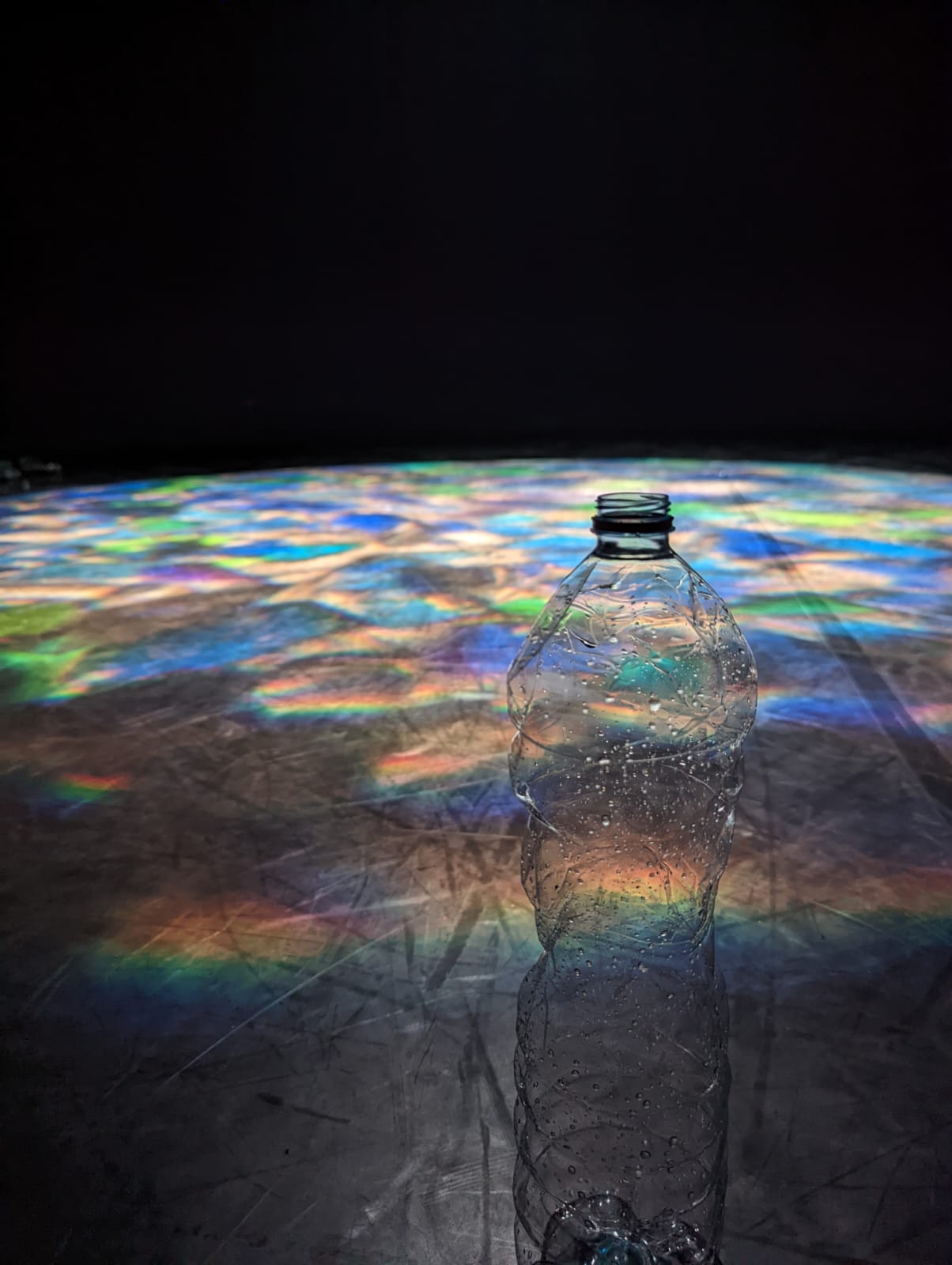
Ninfee è l’immersione, attraverso il corpo della performer e il suo movimento, in uno stagno in cui riscoprire le proprie emozioni e percezioni di fronte alla relazione con l’altro, con le persone e con l’ambiente.
Nel tempo di una relazione, il corpo attraversa l’entusiasmo, l’affetto, l’amore ma anche la paura, la delusione, la rabbia, l’impotenza… esplora parti di sé inesplorate, “toccando il fondo” a volte e nell’azione e condivisione modifica l’ambiente in cui vive, e in cui vivrà nel futuro. Lo spazio scenico si offre come uno spazio in cui possono cadere e ritrovarsi alcune parti di noi, in cui possiamo ritrovare oggetti, in cui si scende nell’oscurità, in cui riemergono e galleggiano “pezzi” che saranno parte indelebile della nostra storia, che rimarranno, come rifiuti gettati nelle acque della Terra, sulla nostra superficie fino al momento in cui… [...] Che sia la relazione con una persona o con la Terra che ci ospita, il luogo porta le tracce delle nostre azioni e non ci resta che decidere se lasciar cadere tutto oppure prenderci cura di qualcosa di distrutto con l’augurio che sempre custodisca la sua, essenziale e trasformata, bellezza.
ENGLISH
The main sources of inspiration and study to begin the research were the emotions experienced while visiting and observing Monet’s paintings, particularly the famous Water Lilies series housed at the Musée de l’Orangerie. Additionally, reflections and writings on contemporary relationships played a significant role. With attention and openness to exploring the body guided by the materials themselves, part of the creative process will involve improvisation with materials (such as ice, water, and glass) and the creation of sounds, noises, and environments that stimulate, protect, evoke, welcome, and disturb the body. Music also plays a fundamental role, as in previous projects. In a small section, the performer herself will momentarily become an observer and spectator, before returning to engage with the audience through movement and thought.
The primary desire of this project is for the involved artists (the choreographer and the music composer) to investigate a human condition, interpreting Monet’s painted images through their own feelings, bringing them into the present, and re-inhabiting them. Even through atmospheres seemingly distant from those explored in previous works, they aim to use various artistic languages to open up imaginative scenarios where the audience can lose or find themselves, using art to grow in everyday life.
Ninfee immerses viewers in a pond where they can rediscover their emotions and perceptions in relation to others, people, and the environment. Over the course of a relationship, the body experiences enthusiasm, affection, love, but also fear, disappointment, anger, and helplessness. It explores uncharted parts of itself, sometimes “touching the bottom,” and through action and sharing, it modifies the environment in which it lives and will continue to live. The performance space becomes a place where fragments of ourselves fall and are found, where objects can be retrieved, where darkness is descended into, and where “pieces” emerge and float—an indelible part of our history, like debris cast into the waters of the Earth, remaining on our surface until… Whether it’s a relationship with a person or with the Earth that hosts us, the place bears the traces of our actions, and we must decide whether to let everything fall or care for something broken, hoping it always preserves its essential and transformed beauty.
Di / by LUCREZIA C. GABRIELI
Disegno luci / lighting design GIACOMO CALLI E LUCA GIOVAGNOLI
Musiche / music GIACOMO CALLI
Produzione / production COMPAGNIA ABBONDANZA/BERTONI
Coproduzione /co-production COLLETTIVO 42STEMS
Progetto selezionato e realizzato all’interno del Bando Non Addomesticabili 23 promosso da Centro Santa Chiara e Aria Teatro
e realizzato con il sostegno del Centro di Residenza della Toscana Armunia - CapoTrave/Kilowatt e grazie all’azione Nuove Traiettorie 2022


Contatti/Contacts
Via Cartiera, 15
38068 Rovereto (Trento) - Italy
tel.: +39 0464 439157
fax: +39 0464 400029
Dalia Macii
email: organizzazione@abbondanzabertoni.it
mobile: +39 338 6699173
Marilù Ursi
email: ufficiostampa@abbondanzabertoni.it
mobile: +39 338 9945014
Erika Parise
email: comunicazione@abbondanzabertoni.it
mobile: +39 334 3079502